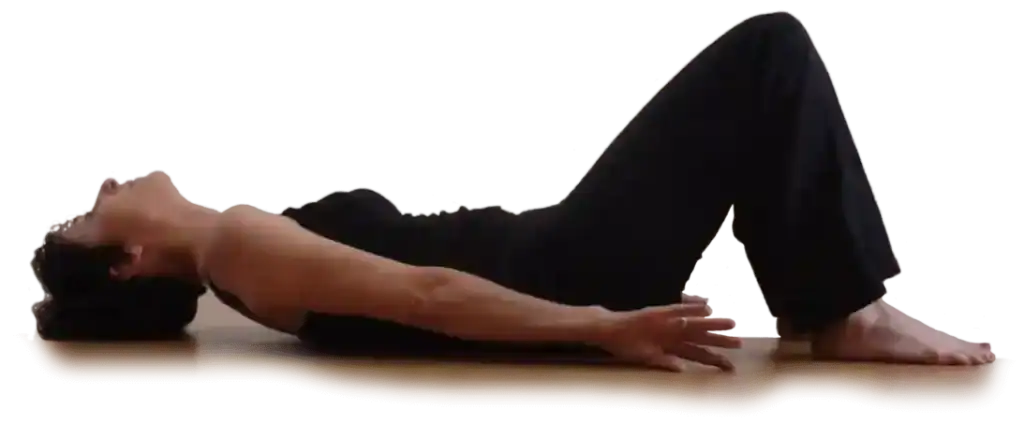

הגישה הסומטית מייצגת מסלול הוליסטי לבריאות, תוך שימת דגש על הקשר בין הנפש והגוף.
What Does "Somatic" Mean,
and What Is the Somatic Approach?
המאמר באודיו
מה זה "סומטי" ומהי הגישה הסומטית
Understanding the Somatic Approach
The somatic approach offers a holistic path to health by recognizing the inseparable relationship between body and mind. Through movement, awareness, and direct experience, it helps restore natural movement, reduce chronic tension, and support lasting physical, emotional, and mental well-being.
The somatic approach offers a holistic path to health and well-being by recognizing the inseparable relationship between body and mind. The word “somatic” comes from the Greek word soma, meaning “the living body as experienced from within.” Dr. Thomas Hanna, the founder of Clinical Somatic Education, was the first to use this term to highlight the body as the primary medium through which we experience, communicate with, and navigate the world. The somatic approach is founded on the understanding that our physical, emotional, and mental well-being are deeply interconnected, and that meaningful change in one area often supports positive change in the others.
Unlike many conventional approaches that rely primarily on conversation, cognitive analysis, or attempts to mechanically correct the body or its movement, the somatic approach places mindful movement, awareness, and direct bodily experience at the heart of the healing process. It is based on the understanding that the body holds patterns of tension, trauma, and emotional experience that may be expressed as pain, muscular tension, restricted movement, or other forms of dysfunction. By learning to sense and understand the body’s internal signals, we gain deeper insight into our psychological and emotional lives, uncover long-held patterns, and create the conditions for profound transformation through movement.
At its core, the somatic approach includes a wide range of practices designed to cultivate body awareness, release physical and emotional tension, improve movement efficiency, and support emotional and mental well-being. These practices include therapeutic methods, movement education, and experiential exercises that encourage mindful attention, self-exploration, and a more conscious relationship with oneself and the surrounding environment.
Somatic practices encompass a broad spectrum of methods and disciplines, including Yoga, Tai Chi, Qigong, the Alexander Technique, Rolfing® Structural Integration, the Feldenkrais Method, and Hanna Somatics. While many other somatic disciplines incorporate dance and expressive movement, the methods listed here are those that offer practical tools people can learn and continue using independently as part of their own healing process.
Each of these approaches offers a unique pathway to developing greater body awareness, improving movement and posture, releasing long-held patterns of tension, and fostering a deeper connection with oneself while supporting the capacity for lasting change from within.
The History of the Somatic Approach
The somatic approach has evolved over centuries, drawing from ancient traditions as well as modern methods of movement education and body awareness. Its history reflects a growing understanding of the profound relationship between body, mind, and human experience.
The somatic approach encompasses a diverse range of holistic methods and practices that emphasize the relationship between body and mind. Its purpose is to improve physical well-being, reduce stress, and cultivate greater self-awareness through movement, touch, and mindful attention.
Although the term “somatics” was introduced by Dr. Thomas Hanna in the 1970s, the principles underlying the somatic approach have much deeper roots. Drawing from both ancient traditions and modern movement sciences, the field has evolved significantly throughout the twentieth century.
Below is a brief overview of the history of the somatic approach, presented through some of the most influential methods that have shaped its development in chronological order.
Key Methods That Shaped the Somatic Approach
The somatic approach has been shaped by a wide range of movement and body-oriented methods developed across different cultures and historical periods. Each has contributed valuable insights into the relationship between movement, awareness, and human well-being.
Yoga
With origins dating back more than 5,000 years in ancient India, Yoga is one of the earliest forms of somatic practice. It combines physical postures, breathing techniques, and meditation to cultivate harmony between body, mind, and spirit while supporting overall health and personal growth.
Tai Chi and Qigong
Originating in ancient China, these practices integrate slow, intentional movement, breathwork, and meditation to enhance the flow of Qi, or vital life energy, throughout the body. They promote circulation, balance, and physical and mental well-being. While Tai Chi emerged as a martial art during the sixteenth century, the roots of Qigong extend back more than 4,000 years.
The Alexander Technique
Developed by Frederick Matthias Alexander (1869–1955), this method focuses on improving posture and movement habits to reduce unnecessary tension and restore greater ease and efficiency in everyday movement. It helps people recognize and change habitual patterns that interfere with natural coordination.
Rolfing® Structural Integration
Founded by Dr. Ida Rolf (1896–1979), Rolfing® focuses on the body's connective tissue (fascia) to improve structural alignment and balance. Rolf believed that the relationship between gravity and the body's structural organization plays a fundamental role in health, movement, and overall well-being.
The Feldenkrais Method®
Developed by Moshe Feldenkrais (1904–1984), this approach uses gentle movement and focused attention to improve movement patterns and enhance physical and mental functioning. It emphasizes learning through movement, enabling people to discover more efficient and effortless ways of moving.
The Trager® Approach
Created by Milton Trager (1908–1997), this method uses gentle, rhythmic movement and touch to encourage deep relaxation, ease of movement, and the release of long-held physical and mental tension. It helps the nervous system rediscover greater freedom, flexibility, and spontaneity.
Hanna Somatics
Developed by Dr. Thomas Hanna (1928–1990), Hanna Somatics combines movement education and sensory awareness to relieve chronic pain and restore comfortable movement. It is based on the principles of Clinical Somatic Education, using active self-pandiculation to reconnect the brain with chronically contracted muscles, restore voluntary control, and release unnecessary muscular tension.
Body-Mind Centering®
Founded by Bonnie Bainbridge Cohen during the 1970s, Body-Mind Centering® explores the relationship between the body's systems and human movement, perception, and expression. Through movement, touch, voice, and directed attention, it supports greater integration of body and mind.
Somatic Experiencing®
Developed by Dr. Peter A. Levine in the late twentieth century, Somatic Experiencing® is a therapeutic approach designed to address the effects of trauma and chronic stress on the nervous system. It uses bodily sensations as a pathway for restoring regulation, resilience, and recovery.
Aston® Patterning
Created by Judith Aston during the 1970s, Aston® Patterning integrates movement education, bodywork, and ergonomics to improve posture, movement efficiency, and overall well-being. It focuses on identifying and transforming inefficient movement habits and patterns of tension.
These are only some of the many methods that have contributed to the development of the somatic field.
Each of these approaches offers a unique perspective on the relationship between body and mind, emphasizing the essential role of movement and awareness in supporting physical, emotional, and psychological well-being. Together, they form the rich and diverse foundation of the modern somatic approach, providing multiple pathways for healing, self-discovery, and lifelong learning.
Core Principles of the Somatic Approach
The somatic approach is guided by a set of principles that recognize the body’s innate capacity for awareness, self-regulation, and change. Together, these principles provide the foundation for healthier movement, greater resilience, and deeper self-understanding.
Body-Mind Integration
The somatic approach recognizes the body and mind as one integrated system, where changes in physical function influence emotional and psychological well-being, and emotional experiences are reflected in the body.
Body Awareness
A central principle of the somatic approach is the cultivation of greater awareness of bodily sensations, movement, and emotional states. This heightened awareness supports a more harmonious relationship between body and mind and creates the foundation for meaningful change.
Self-Regulation and Self-Healing
The somatic approach supports the body's natural capacity for self-regulation and healing. Rather than imposing change from the outside, it encourages the body's innate intelligence and adaptive abilities to restore balance and improve function.
Movement and Posture
Movement and posture are used as tools for recognizing and releasing habitual patterns of tension, restriction, and inefficient movement. As these patterns change, movement becomes more coordinated, balanced, and effortless.
Embodiment
The somatic approach encourages a fully embodied experience of living by cultivating a deeper sense of presence within the body. This strengthens one's feeling of stability, groundedness, and personal agency while fostering a richer connection with oneself and the surrounding world.
Applications of the Somatic Approach
The somatic approach is applied in a wide range of settings, from healthcare and rehabilitation to education, personal development, and performance training. Its principles support healthier movement, greater resilience, and improved quality of life.
The somatic approach has a wide range of practical applications, extending from therapeutic settings to personal development and performance enhancement. Today, it is used in many fields, including
Therapy and Counseling
Somatic methods are used to support people experiencing trauma, chronic stress, anxiety, and emotional challenges. By helping individuals reconnect with their bodies and process experience through bodily awareness, these approaches promote emotional resilience and nervous system regulation.
Physical Rehabilitation
The somatic approach plays an important role in rehabilitation by improving movement patterns, reducing chronic pain, restoring functional mobility, and supporting recovery following injury or physical limitations.
Stress Reduction and Relaxation
Through movement, breath awareness, and mindful attention, somatic practices help people regulate stress, reduce anxiety, promote relaxation, and develop healthier responses to everyday challenges.
Performing Arts and Athletics
Dancers, musicians, actors, and athletes use somatic methods to refine movement skills, improve performance, enhance coordination, and reduce the risk of injury through greater body awareness and more efficient movement.
What Makes Clinical Somatic Education Unique?
Developed by Dr. Thomas Hanna, Clinical Somatic Education offers a distinctive approach to relieving chronic pain, restoring voluntary movement, and retraining the nervous system. Rather than treating symptoms alone, it addresses the underlying neuromuscular patterns that often give rise to pain and limitation.
Dr. Thomas Hanna’s contribution to the field of somatics was both groundbreaking and transformative. In addition to introducing the term “somatics” to describe the living body as it is experienced from within, rather than as an object observed from the outside, he developed a unique educational approach for relieving chronic pain, restoring natural movement, and improving body awareness.
At the heart of Hanna’s work is the concept of Sensory-Motor Amnesia (SMA), a term he coined to describe a common condition in which the nervous system gradually loses conscious control over certain muscles due to habitual movement patterns, chronic stress, trauma, or injury. Over time, these patterns become automatic, reducing both sensory feedback and voluntary motor control. According to Hanna, Sensory-Motor Amnesia is one of the primary causes of chronic muscular tension, pain, stiffness, and reduced mobility.
Clinical Somatic Education is designed to reverse this process by retraining the nervous system rather than treating the muscles directly. Through specific movement lessons, the brain relearns how to sense, control, and voluntarily release chronically contracted muscles, restoring freedom of movement from within.
One of Hanna’s most important contributions is his emphasis on first-person proprioceptive awareness. Instead of relying on external correction, mirrors, or passive treatment, people learn to experience movement from the inside by refining their perception of muscular effort, body position, and coordination.
This learning takes place through gentle, mindful movements known as pandiculations. A pandiculation consists of a slow, voluntary muscular contraction followed by an equally slow, conscious release and a period of complete relaxation. This process reactivates the brain’s voluntary control over the muscles and restores healthy communication between the sensory and motor systems. Unlike stretching or passive forms of relaxation, pandiculation actively engages the nervous system, creating lasting improvements in muscular control and movement.
Another distinguishing feature of Hanna’s approach is its view of the body as an integrated system rather than a collection of isolated parts. Instead of focusing solely on symptoms or painful areas, Clinical Somatic Education recognizes that muscles function in coordinated patterns and that chronic tension in one region can affect the organization and movement of the entire body. As these patterns are restored, improvements often extend well beyond the original complaint, leading to greater mobility, reduced chronic pain, improved posture, and a renewed sense of confidence and ease in movement.
Perhaps most importantly, Clinical Somatic Education empowers people to become active participants in their own recovery and long-term well-being. By learning to recognize and change habitual movement patterns and automatic reflex responses, individuals develop practical self-care skills they can use throughout their lives. This educational model reflects Hanna’s fundamental belief that the brain and nervous system remain capable of learning, adapting, and changing at every stage of life when provided with the right awareness, guidance, and practice.
A Different Way to Think About Movement
Clinical Somatic Education stands apart through its innovative approach to neuromuscular re-education, emphasizing active participation, a holistic understanding of the body, and the ability to perform self-pandiculations independently, without relying on ongoing treatment.
By addressing the underlying causes of chronic muscular tension and habitual reflex patterns through pandiculation, Clinical Somatic Education offers a powerful pathway toward restoring natural movement, relieving chronic pain, and improving overall quality of life. As people regain voluntary control of their muscles, they often experience greater physical comfort, emotional resilience, mental clarity, and renewed confidence in the way they move through life.