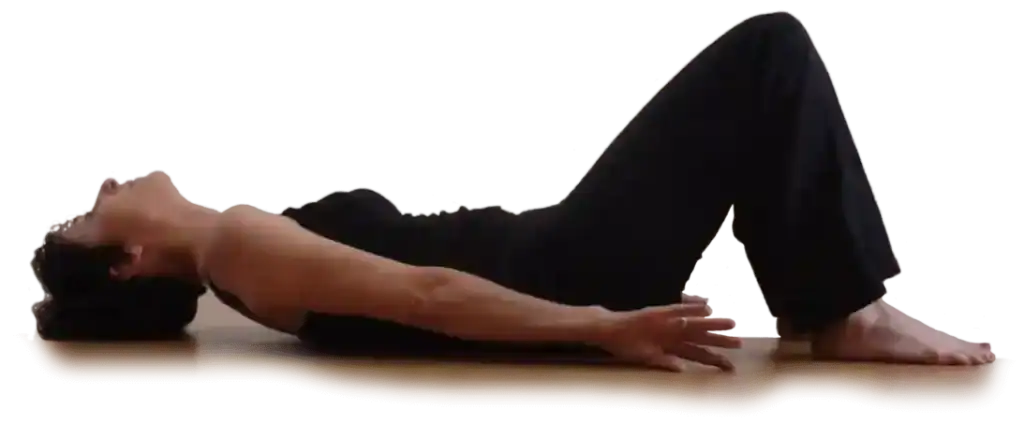

תומס האנה מגדיר סומה כחישת הגוף כפי שהיא נחווית מבפנים. חוויה זו של חישת והכרת הגוף מבפנים, הינה אחד העקרונות היסודיים של החינוך לתנועה סומטית.
Educational Somatic Movement
What Is Soma?
המאמר באודיו
חינוך לתנועה סומטית, מה זה "סומה"?
What Is Soma?
The term “soma,” coined by Thomas Hanna, refers to the human body as a living, aware, and responsive being. Thomas Hanna defined the soma as “The Body Experienced from Within,” meaning the way we experience our body from the inside.
The word “soma” originates from the ancient Greek word “σῶμα,” meaning “body.” Within Educational Somatic Movement, soma refers not only to the physical body but also to the entirety of our inner sensory experience and self-awareness. It is a concept that includes consciousness, sensations, emotions, and the relationships between them.
Thomas Hanna expanded the meaning of the word “soma” to describe the human organism as an integrated experience of sensation, perception, thought, action, and movement from a subjective perspective. He proposed that the body is not merely a physical object but also a self-aware living organism. As such, it has the innate capacity to regulate itself, correct itself, change itself, and recover itself.
The essential difference between the body and the soma is that the body is something that can be observed from the outside, while the soma is our subjective experience of ourselves from within.
The body is a physical object that can be measured, weighed, and studied through sciences such as anatomy and physiology.
The soma, on the other hand, is our personal awareness of everything that takes place within the body and mind.
The Three Somatic Reflexes
Within Educational Somatic Movement, three primary involuntary reflexes form the foundation of Thomas Hanna’s understanding of sensory motor patterns.
The Red Light Reflex
The Red Light Reflex is a protective survival response.
It primarily involves the muscles at the front of the body, which contract to protect our most vulnerable internal organs, including the heart, lungs, and digestive organs.
This reflex instinctively activates whenever we encounter a sudden loud noise or perceive danger. It is especially dominant during periods of stress, anxiety, grief, and emotional trauma.
The Red Light Reflex can also develop gradually through prolonged forward bending, such as sitting hunched over a computer or working for long periods in occupations that require a forward-leaning posture.
The Green Light Reflex
The Green Light Reflex is the action-oriented reflex that prepares us to move forward and engage with the world.
It first appears in infants at around five to six months of age and is activated hundreds of times each day in people living within modern industrialized societies.
As this reflex becomes habitual, the muscles of the back remain continuously engaged. Over time, this chronic activation may lead to excessive muscular contraction and an exaggerated arch in the lower back.
The Trauma Reflex
The Trauma Reflex develops involuntarily in response to accidents and physical injuries.
In an attempt to protect itself from further pain, the nervous system creates compensatory postural patterns, primarily through the diagonal muscles of the body. Over time, these patterns may produce a permanently shortened waist on one side, an elevated and rotated pelvis, the appearance of one leg being longer than the other, one shoulder positioned higher than the other, and a sideways tilt of the head as the brain attempts to keep the eyes and head level.
The Three Perspectives of the Word "Soma"
Thomas Hanna described three primary perspectives through which the concept of the soma can be understood.
1. First-Person Perspective (Subjective)
Describes the individual's personal experience, including inner sensation, self-awareness, and the way a person experiences themselves and their own body.
2. Second-Person Perspective (Intersubjective)
Describes the interaction and communication between different somas, and the way our personal experience both influences and is influenced by others within a social context.
3. Third-Person Perspective (External Observation)
Describes the body as a physical entity that can be observed, measured, and studied through science, anatomy, and physiology.
The Use of the Term "Soma" Following Thomas Hanna
After Thomas Hanna introduced the term “soma” within the field of Somatics, it was adopted and further developed by many teachers and practitioners. For example, Martha Peterson of Essential Somatics®, along with other educators and clinical somatic practitioners, uses the term “soma” to emphasize the importance of the body’s lived, first-person experience as the foundation for learning, healing, and personal transformation.
Peter Levine and Somatic Experiencing®
Peter Levine, the founder of Somatic Experiencing®, also used the concept of the soma to describe the way the body responds to trauma and stress.
Within Somatic Experiencing®, the emphasis is on becoming aware of and processing physiological responses and bodily sensations in order to support the resolution of trauma and restore the body’s natural capacity for regulation, resilience, and balance.
The Psychosomatic Concept
The term “psychosomatic” describes the relationship between the mind and the body, in which emotional distress or psychological experiences influence physical health and contribute to bodily symptoms. It reflects the interaction between the psyche (mind) and the soma (body), where thoughts, emotions, and feelings may contribute to physical symptoms such as pain, digestive problems, headaches, and other bodily conditions.
The term psychosomatic is commonly used when physical symptoms occur without a clear underlying medical explanation, and psychological factors such as stress, anxiety, depression, or trauma are believed to contribute to their development or intensify their severity. For example, chronic abdominal pain with no identifiable medical cause may be considered psychosomatic if it consistently appears or worsens during periods of emotional stress.
Sensory Motor Amnesia (SMA)
Sensory Motor Amnesia (SMA) is another concept introduced by Thomas Hanna. He described it as a condition in which the brain gradually loses part of its ability to consciously sense and voluntarily control specific muscles as a result of chronic muscular tension and deeply ingrained movement habits.
This condition can become a significant obstacle to somatic change because the brain and body are no longer aware of these habitual movement patterns and are therefore unable to release them. As a result, natural, fluid movement becomes restricted, and the body remains locked in patterns of chronic tension and pain. This limits the body’s ability to recover, adapt, and support lasting somatic change.
For this reason, Educational Somatic Movement, as taught by Essential Somatics®, the school founded by Martha Peterson and widely recognized as the leading international training program based on Thomas Hanna’s work, places strong emphasis on recognizing the many expressions of Sensory Motor Amnesia within somatic practice and human movement as a whole.
Pandiculation: The Pandicular Response
One of Thomas Hanna’s most significant contributions was the development of the technique of pandiculation, a process that helps awaken the nervous system from Sensory Motor Amnesia.
Through pandiculation, the brain relearns how to consciously sense, control, and coordinate muscular activity, restoring awareness and self-regulation to the soma. The process involves a gentle voluntary contraction followed by a slow, conscious release of the muscles into a new state of rest, allowing habitual patterns of tension and long-established movement habits to dissolve.
Final Thoughts
Thomas Hanna’s concept of the soma continues to shape the fields of movement education and clinical somatic practice. As our understanding grows, the soma is increasingly recognized as more than an abstract idea. It reflects the lived experience of the integrated body and mind.
Developing a deeper understanding of the soma enables each of us to create meaningful inner change, opening the way toward greater freedom, ease, and authenticity in the way we move, feel, and live.
"Be very quiet within yourself so that you can become aware of yourself. Usually, when we become very quiet, we tend to fall asleep. This happens because we are not accustomed to sensing ourselves from within while remaining curiously awake. When we can truly feel a muscle and sense what it is doing, we can control it. It's not abracadabra. It's the nature of our sensory motor system"
Thomas Hanna